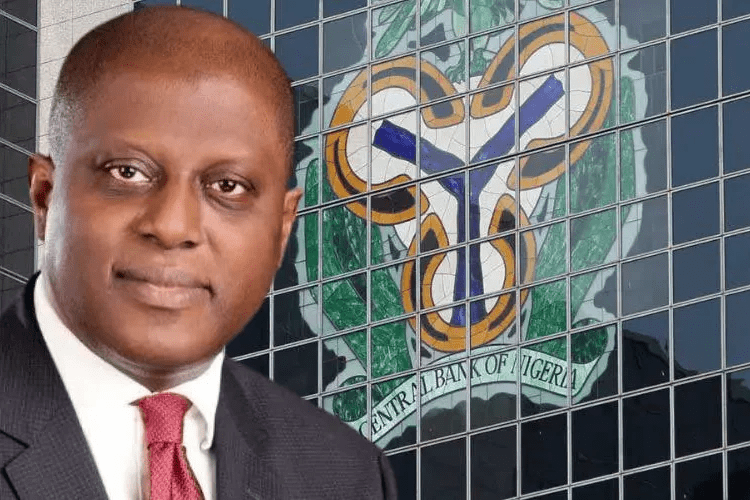
CBN Governor, Yemi Cardoso
Nigeria’s foreign reserves climbed sharply to $48.37 billion as of February 16, 2026, marking a $2.47 billion increase within one month and reinforcing the country’s external buffers amid improved liquidity conditions.
Latest figures from the Central Bank of Nigeria (CBN) show that gross external reserves rose from $45.90 billion recorded on January 13, 2026, representing a 5.4 per cent increase over the period. The accretion extends a steady recovery cycle that began in the second half of 2025, when reserves rebounded from lows of about $37.21 billion in June 2025.
The upward trend continued through the latter part of 2025, with reserves rising to $39.36 billion in July, $41.31 billion in August, $42.35 billion in September, $43.20 billion in October, and $44.67 billion in November, before closing December at $45.50 billion. On a year-on-year basis, reserves have increased by nearly $7.49 billion, or 18.3 per cent, from $40.88 billion at the end of December 2024.
At over $48 billion, the reserves position now provides import cover exceeding 14 months of goods imports, compared to about eight months in mid-2025 when pressures in the foreign exchange market saw the naira weaken beyond N1,600 per dollar. The stronger reserve position enhances Nigeria’s ability to defend the naira amid global financial volatility and commodity price fluctuations.
Analysts attribute the buildup to stronger oil receipts supported by geopolitical tensions in the Middle East and steady OPEC+ output quotas, which boosted crude export earnings. Remittances from the Nigerian diaspora, estimated at over $25 billion in 2025, also played a key role, aided by the unified exchange rate regime introduced in 2023.
Additional inflows came from multilateral sources, including a $2.5 billion drawdown from the International Monetary Fund (IMF)’s Rapid Financing Instrument in late 2025, as well as World Bank disbursements and Eurobond issuances totaling $3.3 billion in January 2026. Increased foreign portfolio investments in Nigerian Treasury bills, driven by yields above 20 per cent, further supported liquidity.
Under the leadership of CBN Governor Olayemi Cardoso, recent policy measures—including tighter monetary policy with the benchmark interest rate at 27.5 per cent and improved transparency in forex auctions—have helped restore investor confidence, contributing to a 15 per cent rise in foreign inflows to the banking sector in the first quarter of 2026.
While analysts view the reserve growth positively, they caution that sustaining the trend will depend on addressing structural challenges such as oil theft, which has constrained production to about 1.3 million barrels per day, and accelerating fiscal reforms to strengthen non-oil revenue streams.