fpipc
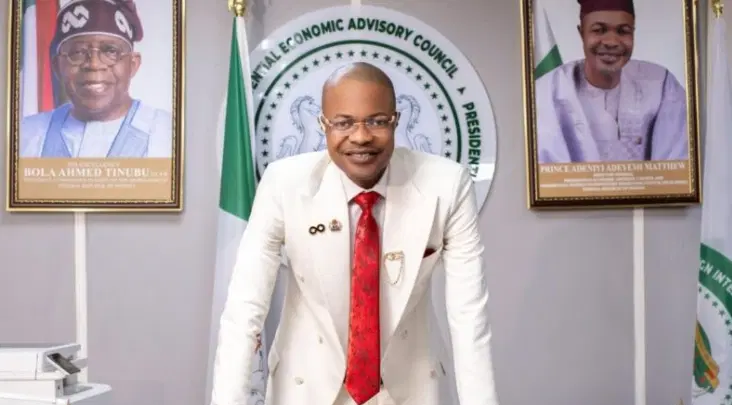
Adeyemi, who remains in police custody, made the claims in a statement issued on Sunday through his legal team, led by Festus Akhigbe, while demanding an opportunity to appear before the House of Representatives ad hoc committee investigating the council.
His lawyers urged the committee, chaired by Yusuf Gagdi, to facilitate his appearance, warning that any report produced without hearing directly from him would violate his constitutional right to fair hearing.
“We formally request that the panel issue the necessary administrative clearance to allow our client, Prince Adeniyi Adeyemi Matthew, to appear in person and testify.
“Any investigative outcome or final legislative report produced without affording our client a direct hearing would be fundamentally flawed, incomplete, and a breach of the constitutional right to a fair hearing (audi alteram partem),” the statement said.
The defence team rejected suggestions that Adeyemi independently established and operated the council without government involvement, insisting that multiple federal institutions dealt with the agency in their official capacities.
According to the statement, the Office of the Secretary to the Government of the Federation acknowledged documents relating to the council and facilitated office allocation within the Federal Secretariat.
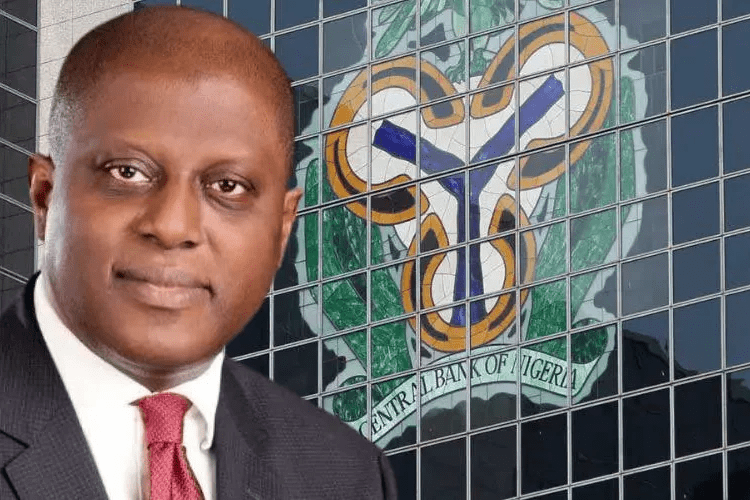
The lawyers further claimed that the Office of the Accountant-General of the Federation and the Central Bank of Nigeria acted on official documentation by issuing administrative budget codes, granting self-accounting status, posting federal civil servants to the council and opening operational accounts.
They also alleged that the Office of the Head of the Civil Service of the Federation approved the council’s organisational structure and granted recruitment waivers that enabled the engagement of 314 personnel.
The legal team further claimed that heads of security agencies attended programmes organised by the council, while the Economic and Financial Crimes Commission allocated office accommodation to it, requested processing fees and presented a plaque of recognition to its leadership.
Questioning the narrative that their client acted alone, the lawyers argued that it was implausible for a private citizen to deceive multiple government institutions over an extended period without official collaboration.
“If the SGF, the Accountant-General, the Central Bank of Nigeria, the Head of Service, the Budget Office, the EFCC, the National Assembly, and the heads of Nigeria’s primary security architecture all verified, processed, funded, and officially interacted with this agency over an extended period, how can a single citizen, Prince Adeniyi Adeyemi, be held uniquely responsible for failing to detect what the entire apparatus of the State validated?
“It is an administrative impossibility for an unassisted individual to mislead every arm of the Federal Government simultaneously without official, high-level institutional sanction,” the statement added.
The defence maintained that Adeyemi was being used as “a scapegoat to cover up deep-seated institutional lapses, procedural breakdowns and internal approvals within the government structure.”
It also called for a broader investigation involving civil society organisations, legal experts and independent observers to examine what it described as the complete documentary trail across all government institutions linked to the council.
“While we note the ongoing proceedings by the House of Representatives ad hoc committee and investigating bodies, justice cannot be served by prosecuting the mouthpiece while ignoring the state machinery that built, budgeted, and bureaucratically birthed the entity.
“We reiterate our call for a truly comprehensive, multi-stakeholder panel that includes civil society, legal experts, and independent observers to audit the complete paper trail across all involved ministries, departments, and agencies,” the lawyers stated.
The controversy comes as the House committee continues its investigation into the operations of the Presidential Foreign Intervention Promotion Council.
During the probe, the Head of the Civil Service of the Federation, Didi Walson-Jack, acknowledged that her office failed to carry out adequate due diligence before approving recruitment requests linked to the council.