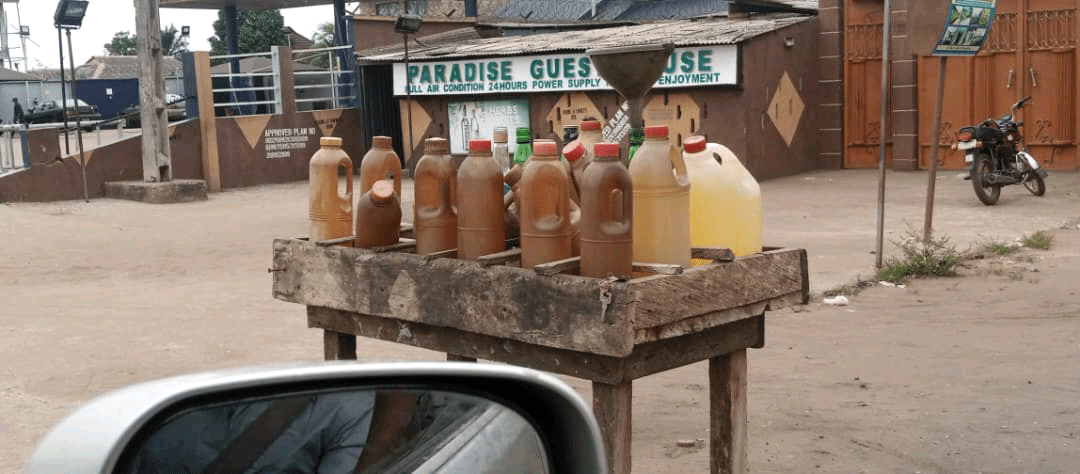
Black market fuel
Ogun State border communities are still grappling with the effects of a six-year-old federal ban on petroleum sales near Nigeria’s land borders.
The ban, introduced in November 2019 under the administration of late President Muhammadu Buhari, was intended to curb smuggling of subsidized fuel to neighbouring countries and restrict supplies to terrorists and bandits.
Despite partial waivers granted to select filling stations over the years, residents in border towns such as Ipokia, Imeko Afon, Yewa North, and Yewa South continue to face difficulties accessing fuel.
Some locals reported paying N800–N900 per litre at authorized stations, while black-market rates soar to N1,200. Transportation costs have also skyrocketed, with trips costing residents up to N5,000.
The waivers, managed by the Nigeria Customs Service and the National Security Adviser, allowed some stations to resume operations in 2020 and 2025. However, residents said the relief is insufficient.
“Only two stations operate in Iwoye. Once they are sold out, it takes one to two weeks before the next supply,” said Ahmed Ismaila, CDA Chairman of Iwoye-Ketu, Imeko Afon LGA.
Monarchs and community leaders are urging President Bola Ahmed Tinubu to lift the ban entirely. Oba Akintunde Akinyemi, Eselu of Eselu Kingdom, argued that the restriction has worsened socioeconomic conditions, fueling black-market trade and rising crime.
Human rights advocates also criticised the policy.
Comrade Yinka Folarin, National President of the Committee for the Defense of Human Rights (CDHR), called it “a form of discrimination against fellow Nigerians,” stressing that access to essential commodities like fuel is a basic human right under the Nigerian Constitution and the African Charter on Human and Peoples’ Rights.
Fuel seizures by customs in Ogun State indicate ongoing smuggling, with more than 190,000 litres intercepted over the past year.
Residents, however, insist the ban should be fully lifted, urging government to implement security measures that prevent smuggling without depriving communities of legitimate fuel access.