The House of Representatives has criticised the chronic underfunding of the Office of the Auditor-General for the Federation, warning that poor financing could weaken Nigeria’s anti-corruption framework and undermine public accountability.
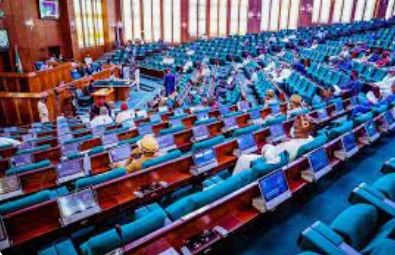
The lawmakers raised the concern on Wednesday during the 2026 budget defence session of the Office at the National Assembly Complex, Abuja, before the House Public Accounts Committee chaired by Bamidele Salam.
While reviewing the proposed N15.88bn allocation to the Office of the Auditor-General for the Federation (OAuGF) in the 2026 fiscal year, the committee noted that the amount represents just 0.027 per cent of the N58.47tn Federal Government budget.
Members described the allocation as grossly inadequate considering the constitutional responsibility of the Auditor-General to audit over 1,000 Ministries, Departments and Agencies, as well as government-funded institutions nationwide.
Salam said it was unrealistic to expect the Auditor-General’s Office to effectively scrutinise a proposed N58.47tn budget with such minimal funding. He revealed that due to funding constraints in previous years, the Office audited only five out of about 100 Nigerian foreign missions.
The lawmaker further disclosed that in the 2025 fiscal year, only four per cent of the Office’s capital allocation was released, significantly limiting its operational capacity.
A breakdown of the 2026 proposal shows that N5.3bn is allocated for personnel costs, N5.6bn for overheads, and N4.8bn for capital expenditure.
The lawmakers cited international best practices by the International Organisation of Supreme Audit Institutions (INTOSAI), which recommend that supreme audit institutions enjoy sufficient, independent and secure funding to operate effectively without interference.
They also stressed the need for budgetary autonomy, noting that audit institutions should ideally submit budget proposals directly to the legislature to safeguard their independence.
“This is associated with weak institutions, which have contributed to the corruption ravaging our country,” Salam said.
The House Committee urged the Federal Government and relevant stakeholders to prioritise adequate funding and ensure full release of appropriated funds to strengthen the capacity of the Auditor-General’s Office to prevent corruption, waste and mismanagement of public resources.
The Office of the Auditor-General for the Federation is empowered under Section 85 of the 1999 Constitution (as amended) to audit and report on the public accounts of the Federation and Federal Government institutions.
However, analysts warn that without stronger funding and institutional independence for the Auditor-General’s Office, efforts to promote transparency, curb corruption and ensure fiscal discipline may remain limited—especially as Nigeria’s 2026 budget stands as one of the largest in the country’s history.